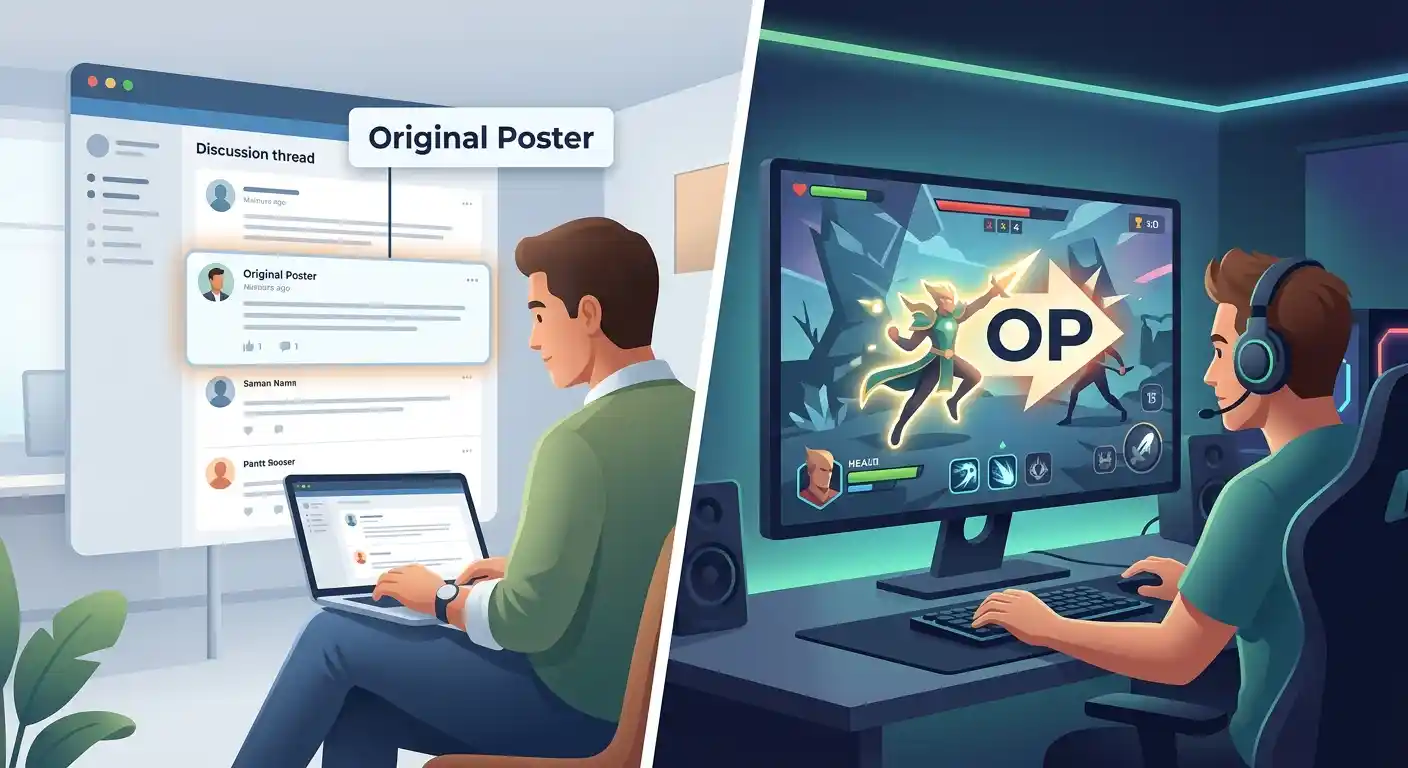
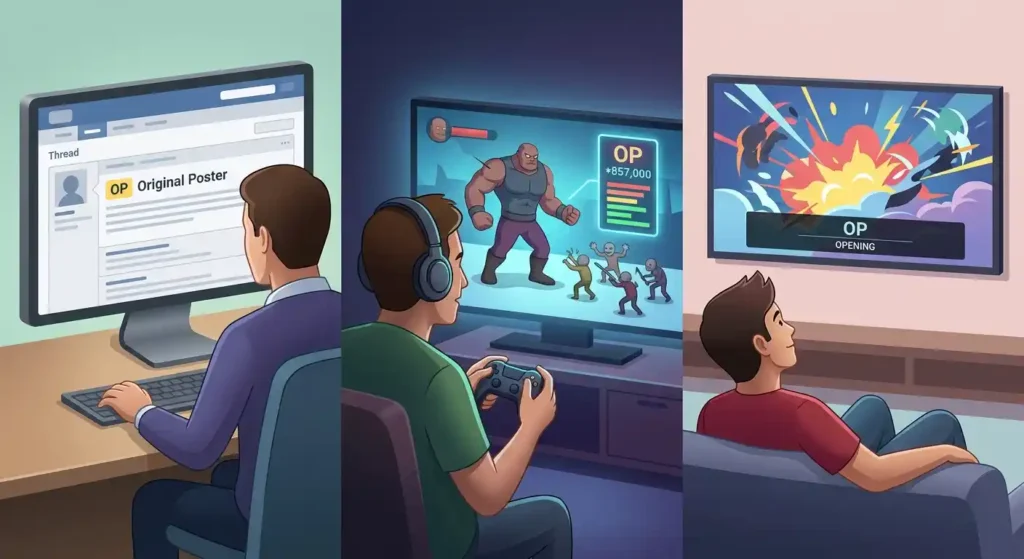
OP in text usually means “original poster,” the person who created a post or started an online discussion. In gaming, OP commonly means “overpowered,” while original post is another common use. The surrounding context tells you which meaning applies.
Key Takeaways
- OP commonly means original poster in online discussions.
- OP can also mean original post, referring to the post itself.
- In gaming, OP means overpowered.
- In anime discussions, OP can mean an opening or opening theme.
- OP is informal internet shorthand, so the sentence and topic matter.
- OP and opp can have different meanings and should not automatically be treated as the same term.
OP Meaning in Text
OP is an informal abbreviation with several meanings in online communication. Its most common meanings depend on what people are discussing.
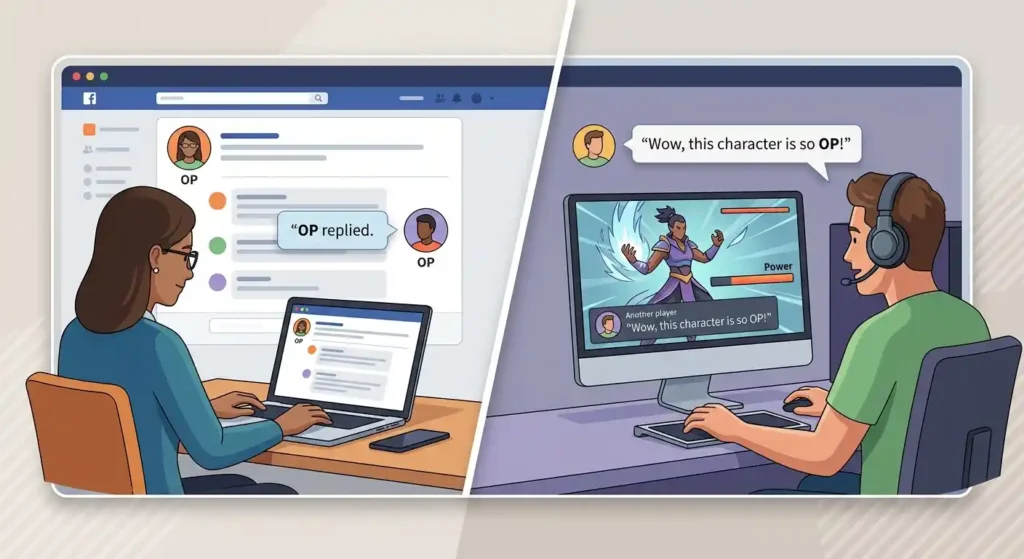
When the conversation is about a post or discussion, OP usually means “original poster.” That is the person who created the post or started the thread.
For example:
“OP explained everything in the comments.”
Here, OP refers to the person who made the post.
When someone says:
“Read the OP before commenting.”
OP can mean “original post”—the first or main post in a discussion.
In gaming, however, OP usually means “overpowered.” It describes a character, weapon, ability, or strategy that seems unusually strong.
“That character is OP.”
The topic makes the intended meaning clear.
What Does OP Stand For?
OP does not have one universal expansion.
Original Poster
Original poster is the person who created a post, thread, or online discussion.
Example:
“I agree with OP.”
Original Post
Original post refers to the post or content that began a discussion.
Example:
“The answer is already in the OP.”
Overpowered
Overpowered is mainly used in gaming. It describes something considered unusually powerful compared with other options.
Example:
“That weapon is so OP.”
These meanings are distinct, so context is important.
How Is OP Used?
Text Messages and Group Chats
OP can appear in a private conversation when people are discussing something posted online.
“Did OP ever reply?”
Here, OP most likely means the original poster.
Online Discussions
People use OP to refer to the person who started a thread.
“OP made a good point.”
Comments and Social Media
When a comment discusses the creator of a post, OP can mean original poster.
“Someone should tell OP.”
Gaming Chats
In gaming, OP means overpowered.
“That build is OP.”
The gaming meaning is separate from the posting-related meaning.
OP in Different Contexts
| Context | Meaning | Example |
|---|---|---|
| Online discussion | Original poster | “OP answered the question.” |
| Discussion thread | Original post | “Check the OP.” |
| Gaming | Overpowered | “That character is OP.” |
| Anime or fandom | Opening/opening theme | “The OP is catchy.” |
A useful clue is what OP is describing. If it refers to a person who posted something, think original poster. If it describes strength in a game, think overpowered.
Real Chat Examples
- “OP explained the situation really well.”
- “I agree with OP.”
- “Did OP ever respond?”
- “Ask OP for more details.”
- “OP left out an important detail.”
- “Someone should tell OP.”
- “OP already answered that.”
- “The answer is in the OP.”
- “Read the OP first.”
- “I found that information in the OP.”
- “That character is OP.”
- “This weapon is way too OP.”
- “That ability is OP after the update.”
- “Why is that character so OP?”
- “That build feels OP.”
- “OP made a good point.”
- “I wonder if OP will update the post.”
- “The details are written in the OP.”
- “That boss is seriously OP.”
- “I never skip the anime OP.”
How to Reply to OP
Your response depends on which meaning the sender intended.
Casual Replies
If OP means original poster:
- “Yeah, I saw their post.”
- “I agree with OP.”
- “I’ll check what they said.”
Friendly Replies
- “OP explained it pretty clearly.”
- “Yeah, they made a good point.”
- “Let’s see if OP responds.”
Funny Replies
If OP means overpowered:
- “Yeah, that thing is ridiculous 😂”
- “Definitely needs a nerf 😂”
- “No one can compete with that.”
Neutral Replies
If you’re unsure:
- “Do you mean the original poster?”
- “Are you talking about the post or the person?”
- “Do you mean overpowered?”
What Tone Does OP Have?
OP is generally casual, informal, and neutral.
The abbreviation itself does not automatically make a message friendly, sarcastic, angry, or romantic. The surrounding words determine the tone.
For example:
- “OP explained everything.” — neutral
- “OP is hilarious.” — casual and positive
- “That weapon is OP.” — gaming-related
- “Read the OP.” — direct and informational
Is OP Rude or Offensive?
OP is not normally rude or offensive. It is informal internet shorthand.
It works naturally in casual online conversations, discussions, comments, and gaming chats. For school, work, or formal writing, spelling out original poster, original post, or overpowered is clearer for people who may not know the abbreviation.
Other Meanings of OP
OP in Anime and Fandoms
In anime discussions, OP can mean opening or opening theme.
For example:
“The OP for that anime is really good.”
Here, OP has nothing to do with an online poster or gaming balance.
OP in Technical Contexts
OP can also have specialized meanings in professional or technical fields. These meanings are separate from internet slang and should be interpreted from the subject being discussed.
Common Mistakes About OP
Assuming OP Always Means Original Poster
It doesn’t. In gaming, OP commonly means overpowered.
Confusing Original Poster With Original Post
These refer to different things:
- Original poster = the person.
- Original post = the content.
The sentence usually makes the distinction clear.
Assuming OP Means Opponent
Opp is a separate slang term commonly used for an opponent or rival. Don’t automatically interpret every instance of OP as “opponent.”
Assuming OP Has a Romantic Meaning
OP does not inherently signal flirting or romantic interest. If it appears in a personal conversation, the rest of the message and conversation topic matter more than the abbreviation itself.
OP and Related Slang
| Term | Meaning | Common Use |
|---|---|---|
| OP | Original poster | Online discussions |
| OP | Original post | Discussion threads |
| OP | Overpowered | Gaming |
| Opp | Opponent or rival | Informal slang |
| OG | Original or an original person | Informal internet slang |
| Nerf | Make something weaker | Gaming |
People Also Ask About OP
What does OP mean in texting?
OP usually means original poster when the conversation is about an online post or thread. If the topic is gaming, it usually means overpowered.
What does OP mean on social media?
On social media, OP commonly refers to the original poster, meaning the person who created the post. It can also refer to the original post itself.
What does OP mean in gaming?
OP means overpowered in gaming. It describes a character, weapon, ability, build, or strategy considered unusually strong.
What does OP mean on Reddit?
OP usually means original poster, the person who created the post being discussed. In some sentences, it can instead refer to the original post.
Is OP the same as opp?
No. OP commonly means original poster, original post, or overpowered. Opp is a separate slang term associated with an opponent or rival.
What does OP mean in anime?
In anime discussions, OP can mean opening or opening theme, referring to the show’s opening sequence or song.
How can I tell which OP meaning someone intends?
Look at the subject of the conversation. If OP refers to someone who created a post, it means original poster; if it describes game strength, it means overpowered.
Conclusion
OP is a context-dependent internet abbreviation. In online discussions, it commonly means original poster or original post; in gaming, it means overpowered. In anime conversations, it can also mean opening or opening theme.
The term is casual and generally not offensive. When you’re unsure which meaning someone intends, use the surrounding sentence and conversation topic as your guide.

Emma Brooks is a writer whose work centers on puns, jokes, and topic-specific wordplay. Across four and a half years of experience, she has covered subjects involving food, animals, seasonal occasions, technology, entertainment, and trending topics. Emma identifies useful terms, tests different joke angles, and revises setups and punchlines to strengthen wording and comedic delivery.