Emotional slang refers to informal words, phrases, abbreviations, and expressions people use in texts and online conversations to communicate feelings, reactions, moods, or emotional attitudes. It can express excitement, sadness, affection, frustration, disbelief, empathy, or sarcasm without stating the emotion directly.
Key Takeaways
- Emotional slang is informal digital language used to communicate feelings and reactions quickly.
- It can include words, abbreviations, phrases, emojis, and expressions whose meaning depends on context.
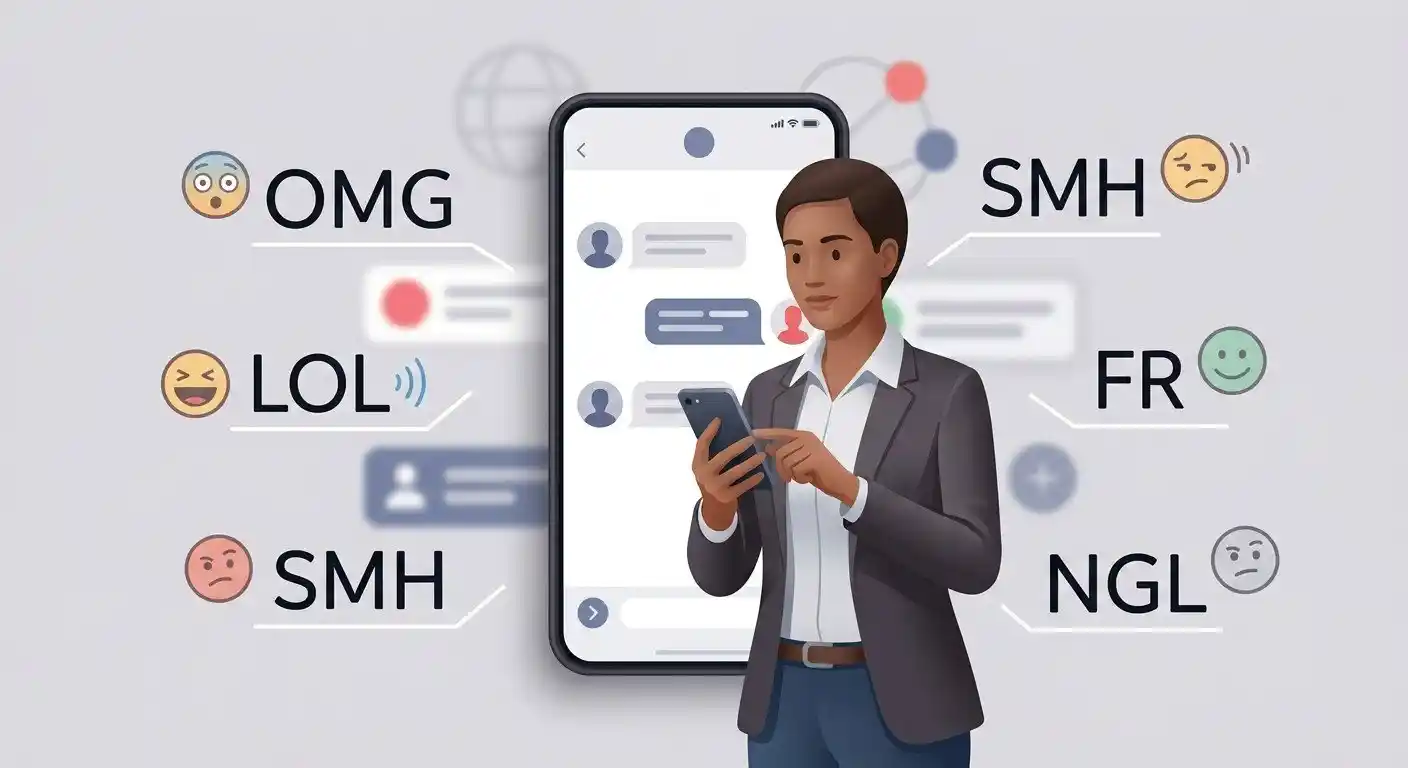
- Common examples include expressions such as OMG, LOL, SMH, FR, NGL, and “I feel this.”
- The same slang expression can communicate different emotions depending on the conversation, punctuation, emoji, and relationship between the people texting.
- Emotional slang is especially useful in texts, DMs, comments, memes, and other casual online communication.
- Slang that works with friends may not be appropriate for school, work, or formal writing.
Emotional Slang Meaning in Text
Emotional slang is informal language that adds an emotional reaction to digital communication. Instead of simply describing what happened, the sender uses slang to show how they feel about it.
For example:
“OMG I can’t believe you did that 😭”
The word OMG expresses surprise, while the crying emoji can add humor, disbelief, or emotional exaggeration.
Another example is:
“That was so sweet fr.”
Here, fr means “for real” and reinforces the speaker’s sincere reaction.
Emotional slang can communicate feelings such as:
- Happiness
- Excitement
- Surprise
- Sadness
- Frustration
- Affection
- Embarrassment
- Disbelief
- Agreement
- Empathy
- Sarcasm
Digital slang can compress complicated emotional reactions into short expressions, which is one reason it works so well in fast-moving online conversations. Research on digital slang also shows that slang can develop emotional meanings beyond a word’s literal meaning.
What Does Emotional Slang Stand For?
Emotional slang is not one acronym, so it does not have one full form.
It is a broad category describing informal expressions that communicate emotion or emotional attitude.
Some examples include:
- OMG — Oh My God
- LOL — Laughing Out Loud
- SMH — Shaking My Head
- FR — For Real
- NGL — Not Gonna Lie
- TBH — To Be Honest
- FOMO — Fear of Missing Out
- IDK — I Don’t Know
These expressions do different jobs. Some communicate surprise, some emphasize sincerity, some show amusement, and others express frustration or uncertainty.
The important point is that emotional slang is a category, not a single texting abbreviation.
How Is Emotional Slang Used?
Emotional slang is most useful when people want to make a short digital message feel more expressive or natural.
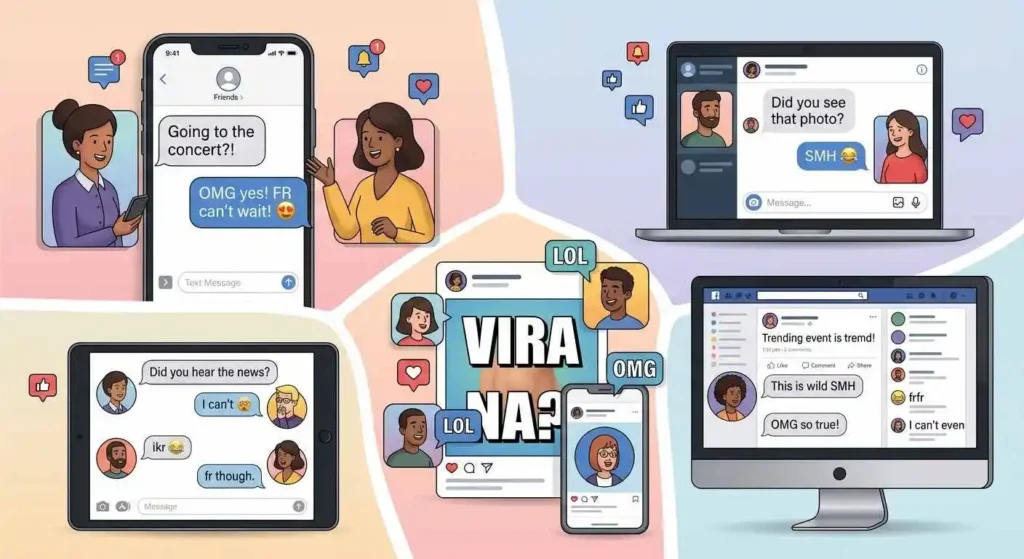
Text Messages
Friends may use emotional slang to react quickly:
“OMG that was hilarious 😂”
or:
“FR, I needed that today.”
The slang adds emotional information without requiring a long explanation.
DMs
In direct messages, emotional slang can make a conversation feel more relaxed:
“NGL, that was really nice.”
The sender is not simply stating an opinion; the expression also signals honesty or sincerity.
Group Chats
Group conversations often use emotional slang as quick reactions:
“Y’all are wild 😭”
or:
“SMH I leave for five minutes…”
The expressions can make the conversation more playful and expressive.
Social Media Comments
Comments often use emotional slang because people need to react quickly to posts, videos, memes, and photos:
“I can’t 😭”
“This is so real.”
“FR 😂”
The literal words may be simple, but the emotional meaning comes from the entire expression.
Memes and Online Communities
Emotional slang is especially common around memes and viral content. A short phrase can communicate a shared reaction without explaining the joke.
The meaning may also shift within a particular online community, which makes context important. Digital slang can spread across platforms and change meaning as people adopt and adapt it.
Emotional Slang in Different Contexts
The same expression can feel very different depending on who sends it and what happened immediately before it.
From a Friend
A friend saying:
“I’m crying 😂”
does not necessarily mean literal crying. In casual online communication, it can be an exaggerated way of saying something is extremely funny.
From a Guy
If a guy says:
“That’s actually so sweet.”
the emotional meaning comes from the complete sentence, not from his gender.
The same principle applies to slang. Gender does not automatically change the meaning of an expression.
From a Girl
If a girl replies:
“Stoppp 😭”
the message could express embarrassment, amusement, affection, or playful disbelief depending on the conversation.
From a Crush
An emotional expression from someone you like can feel more significant, but slang by itself does not prove romantic interest.
For example:
“Aww that’s cute 😭”
could be friendly, affectionate, playful, or romantic. The surrounding conversation and relationship provide the missing context.
In Dating
Emotional slang can soften messages in dating conversations:
“NGL, I had a really good time.”
This sounds more personal and conversational than a formal statement such as:
“I enjoyed our time together.”
However, the slang itself does not guarantee romantic intent.
In a Relationship
Partners may use slang to show affection, humor, excitement, or frustration:
“FR you always make me laugh.”
The expression helps convey the speaker’s attitude toward the statement.
In a Group Chat
Group chats often contain the strongest emotional shorthand because participants already understand each other’s humor and communication style.
For example:
“Y’all really did that 😭”
could mean admiration, disbelief, amusement, or criticism depending on what happened.
Real Chat Examples
Here are realistic examples of emotional slang in everyday digital conversations.
Surprise
1.
A: “I got tickets for the concert.”
B: “OMG NO WAY 😭”
2.
A: “She actually remembered my birthday.”
B: “Awwww 😭”
3.
A: “Guess who showed up?”
B: “WAIT WHAT?”
4.
A: “We got the last table.”
B: “OMG that worked out perfectly.”
Excitement
5.
A: “We’re going to the beach tomorrow.”
B: “LET’S GOOO 😭”
6.
A: “I finally finished it.”
B: “Yesss! I’m so happy for you.”
7.
A: “The tickets are booked.”
B: “FR?! I’m so excited.”
Humor
8.
A: “I tried cooking without reading the recipe.”
B: “I’m crying 😂”
9.
A: “I accidentally sent the message to the wrong group.”
B: “NOOO 😭”
10.
A: “He wore sunglasses indoors.”
B: “I can’t 😂”
Frustration
11.
A: “They changed the plans again.”
B: “SMH.”
12.
A: “The website crashed right before I finished.”
B: “Ugh, that’s so annoying.”
13.
A: “I forgot my charger again.”
B: “Bruh 😭”
Sincerity
14.
A: “Did you actually like it?”
B: “NGL, I really did.”
15.
A: “Was the movie worth watching?”
B: “FR, it was better than I expected.”
Empathy
16.
A: “Today was rough.”
B: “I’m sorry. I hope tomorrow is better.”
17.
A: “I was really nervous about it.”
B: “I get you. That’s totally understandable.”
Affection
18.
A: “Thanks for always helping me.”
B: “Aww, of course ❤️”
19.
A: “You remembered!”
B: “Of course I did 😭”
Disbelief
20.
A: “He really said that in front of everyone.”
B: “NAH 😭”
These examples show why emotional slang cannot always be translated word-for-word. The emotional function of the expression can matter as much as its literal definition.
How to Reply to Emotional Slang
There is no single response because emotional slang covers many different reactions.
Casual Replies
- “For real 😂”
- “I know right?”
- “Same.”
- “Exactly.”
- “Honestly.”
Friendly Replies
- “Aww, I get you.”
- “That makes sense.”
- “I’m glad!”
- “You’re not wrong 😂”
- “I feel that.”
Funny Replies
- “You are so dramatic 😭”
- “I knew you were going to say that 😂”
- “Stoppp 😂”
- “Not you saying that 😭”
- “Okay, that got me.”
Neutral Replies
When you are unsure about the intended emotion:
- “What do you mean?”
- “Wait, are you serious?”
- “How do you feel about it?”
- “What happened?”
- “Can you explain?”
Flirty/Relationship Replies
If the overall conversation is already clearly romantic or playful, emotional slang can be answered naturally:
- “Aww, that’s cute.”
- “You’re making me smile 😂”
- “I was thinking the same thing.”
- “Okay, that was actually sweet.”
- “You’re funny.”
The important thing is to respond to the whole message, not to assume romantic intent from slang alone.
What Tone Does Emotional Slang Have?
Emotional slang can carry many different tones.
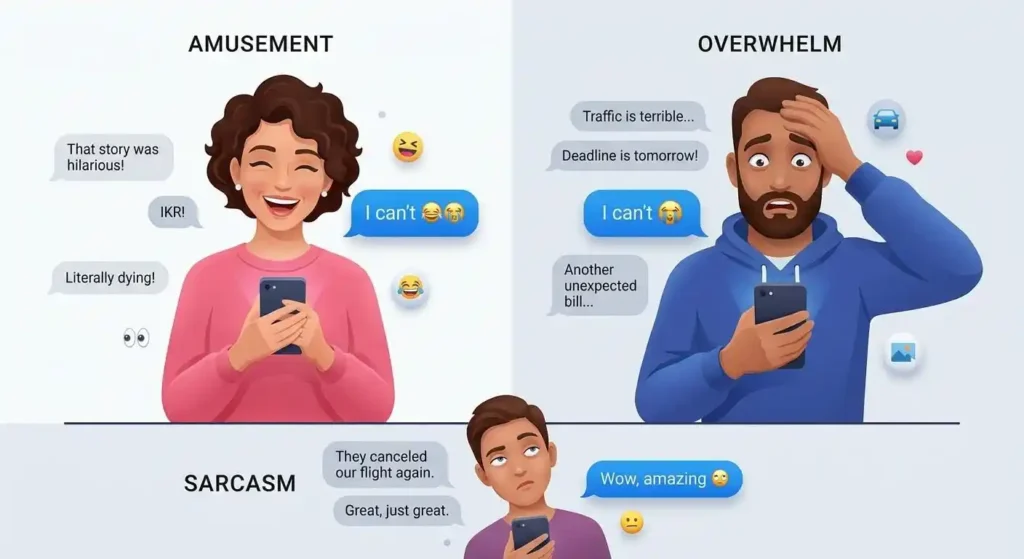
Casual
Expressions such as “lol,” “fr,” and “ngl” can make a message feel relaxed and conversational.
Friendly
A phrase like:
“I feel that.”
can show understanding or shared experience.
Playful
Expressions such as:
“I can’t 😭”
can turn a simple reaction into a humorous one.
Sarcastic
Some emotional slang can be sarcastic:
“Wow, amazing 🙄”
The words appear positive, but the emoji and context can reverse the intended tone.
Direct
Short expressions such as:
“SMH.”
can communicate frustration without much explanation.
Context-Dependent
This is one of the most important features of emotional slang. The same words can communicate different feelings depending on punctuation, emojis, timing, and the relationship between the people.
Even a simple word such as “fine” can sound neutral, annoyed, sarcastic, or reassuring depending on how it appears in a conversation.
Is Emotional Slang Rude or Offensive?
Emotional slang is not automatically rude or offensive. It depends on the particular expression.
For example:
“OMG 😂”
is generally casual and harmless.
But some slang expressions contain profanity, insults, or language that can be inappropriate in certain settings.
Casual Conversations
Emotional slang is generally most natural in relaxed conversations with friends and people who understand your communication style.
Social Media
Informal emotional expressions are common in comments, captions, memes, and DMs.
School
Some slang may be fine in casual messages between classmates, but it is better to use standard language in assignments, presentations, and messages to teachers.
Work
Professional communication generally calls for clearer and more neutral language.
Instead of:
“OMG this is crazy 😭”
a professional message might say:
“This is unexpected. I’ll look into it.”
Formal Writing
Emotional slang is usually not appropriate for essays, applications, reports, or formal documents unless you are specifically discussing language or quoting a source.
Other Meanings of Emotional Slang
“Emotional slang” is a broad language category rather than a technical acronym, so it does not have separate technology, gaming, finance, or medical expansions.
However, emotional slang can appear in specialized online communities and take on community-specific meanings.
Emotional Slang in Social Media
Platforms such as TikTok, Instagram, X, and other social spaces allow slang to spread quickly. Expressions can move between communities and develop new emotional or humorous uses.
Emotional Slang in Gaming
Gaming communities often use short reactions to communicate excitement, frustration, disbelief, or amusement quickly.
Examples include:
- “W” for a win or positive outcome
- “L” for a loss or negative outcome
- “GG” for “good game”
- “LOL” for amusement
The exact meaning can still depend on the community and situation.
Common Mistakes About Emotional Slang
Assuming Every Slang Word Has One Emotional Meaning
A word can communicate different feelings in different situations.
For example, “lol” can indicate genuine laughter, friendliness, awkwardness, or sometimes sarcasm.
Taking Slang Literally
Online expressions are often not literal.
“I’m dead 😂”
usually communicates that something is extremely funny or overwhelming rather than describing a literal event.
Assuming Emojis Have Only One Meaning
An emoji can change the emotional reading of a message. A crying emoji, for example, may represent sadness, laughter, embarrassment, or exaggerated reaction depending on context.
Assuming Slang Proves Romantic Interest
A heart emoji, “aww,” “I miss you,” or another emotional expression can feel romantic, but none of these automatically proves attraction.
The relationship and complete conversation matter more.
Using Casual Slang in Formal Situations
Something that sounds natural in a group chat can sound unprofessional in a school assignment or workplace email.
Emotional Slang and Related Slang
| Term | Meaning | Common Emotional Use |
|---|---|---|
| OMG | Oh My God | Surprise or excitement |
| LOL | Laughing Out Loud | Amusement or lightness |
| SMH | Shaking My Head | Frustration or disbelief |
| FR | For Real | Agreement or emphasis |
| NGL | Not Gonna Lie | Sincerity |
| TBH | To Be Honest | Honest opinion or reaction |
| FOMO | Fear of Missing Out | Anxiety about missing an experience |
| W | Win | Approval or celebration |
| L | Loss | Disapproval or disappointment |
| I can’t | Usually an exaggerated reaction | Amusement, disbelief, or overwhelm |
These expressions do not all describe emotions directly. Instead, they can signal the speaker’s attitude toward whatever is being discussed.
People Also Ask About Emotional Slang
What is emotional slang?
Emotional slang is informal language used to communicate feelings, reactions, attitudes, or moods in a quick and conversational way. It includes abbreviations, phrases, words, and sometimes expressions that gain emotional meaning from context.
What are examples of emotional slang?
Examples include OMG for surprise, LOL for amusement, SMH for frustration or disbelief, FR for emphasis, and NGL for sincerity. The exact emotional tone can change depending on the conversation.
Why do people use emotional slang in texting?
Emotional slang lets people communicate reactions quickly while making messages feel more personal and informal. Digital communication often relies on short expressions to convey emotion without lengthy explanations.
Can emotional slang change meaning?
Yes. Context, punctuation, emojis, timing, and the relationship between the people can change how an expression is understood. A phrase that sounds funny in one conversation may sound sarcastic or annoyed in another.
Is emotional slang appropriate for school?
It depends on the situation. Casual messages with friends may use emotional slang naturally, but assignments and formal school communication should generally use standard language.
Is emotional slang the same as internet slang?
They overlap, but they are not identical. Internet slang is the broader category of informal online language, while emotional slang focuses specifically on expressions that communicate feelings, reactions, or attitudes.
Can emotional slang be misunderstood?
Yes. Short messages often leave out facial expressions, voice tone, and body language, so the same words can be interpreted differently by different people. Reading the surrounding conversation is usually more reliable than decoding one expression in isolation.
Conclusion
Emotional slang is informal digital language that helps people communicate feelings, reactions, moods, and attitudes quickly. It includes abbreviations such as OMG, LOL, SMH, FR, and NGL, along with phrases and expressions whose emotional meaning comes from context.
It is most natural in texts, DMs, group chats, social media, memes, and other casual online communication. The tone can be friendly, playful, excited, frustrated, sarcastic, sincere, or empathetic.
Because emotional slang is highly context-dependent, avoid assuming that one expression always communicates the same emotion or proves romantic interest. For school, work, and formal writing, standard language is usually the clearer choice.

Christopher Hayes has spent five years writing puns and jokes built around the language of specific subjects. His work spans animals, seasonal themes, technology, entertainment, trending topics, and food-related wordplay. He examines terminology and possible word connections, builds joke premises from them, and fine-tunes setups and punchlines for precision, rhythm, and comedic effect.