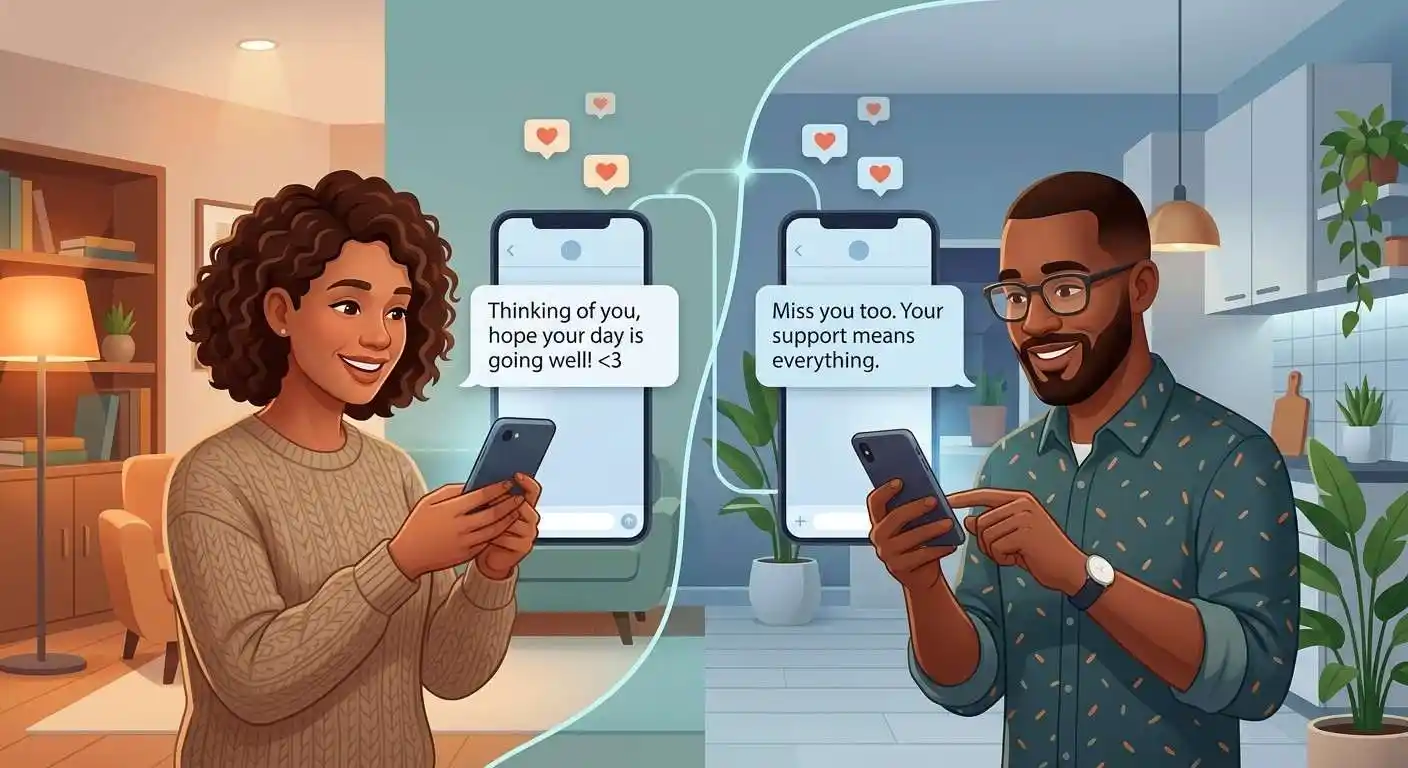
Romantic texting means using text messages or online chats to express affection, appreciation, emotional interest, or romantic feelings toward someone. It can include sweet check-ins, thoughtful compliments, playful flirting, relationship messages, or simple reminders that you care.
Romantic texting does not have to sound dramatic or overly poetic. The most natural messages usually match the relationship, the conversation, and the way the two people normally communicate.
Key Takeaways
- Romantic texting is digital communication used to express affection, interest, appreciation, or emotional closeness.
- It can range from a simple thoughtful message to playful flirting or a heartfelt relationship conversation.
- The same message can feel friendly or romantic depending on context, wording, emojis, and the relationship.
- Romantic texts work best when they sound natural rather than copied or exaggerated.
- A romantic message does not automatically mean someone is in love; the surrounding conversation matters.
- Good romantic texting should respect the other person’s comfort, boundaries, and level of interest.
Romantic Texting Meaning
Romantic texting is a form of online communication where someone uses messages to communicate romantic or affectionate feelings.
Unlike a texting abbreviation or internet slang term, “romantic texting” is a description of a communication style, not a shortened acronym with one fixed definition.
It can happen between people who are dating, partners in a relationship, or people who are getting to know each other romantically. Messages might be sweet, supportive, playful, affectionate, or lightly flirty.
For example:
- “I really enjoyed talking with you today.”
- “You made me smile earlier.”
- “I hope your day is going well.”
- “I’m looking forward to seeing you again.”
The key difference is usually intent and context. A message becomes romantic when it is being used to communicate affection or romantic interest rather than ordinary friendship.
What Does Romantic Texting Stand For?
Romantic texting does not stand for a specific acronym or abbreviation.
The phrase simply combines “romantic”, meaning connected with affection or romantic relationships, and “texting”, meaning communicating through text messages.
You may also see related phrases such as:
- romantic texts
- romantic messages
- sweet texts
- flirty texts
- affectionate messages
- love texts
- relationship texting
- texting your crush
These phrases can overlap, but they are not always identical. For example, a flirty text may show playful interest without expressing serious romantic feelings.
How Is Romantic Texting Used?
Romantic texting can appear in private messages, regular text conversations, group-related conversations, or social messaging features.
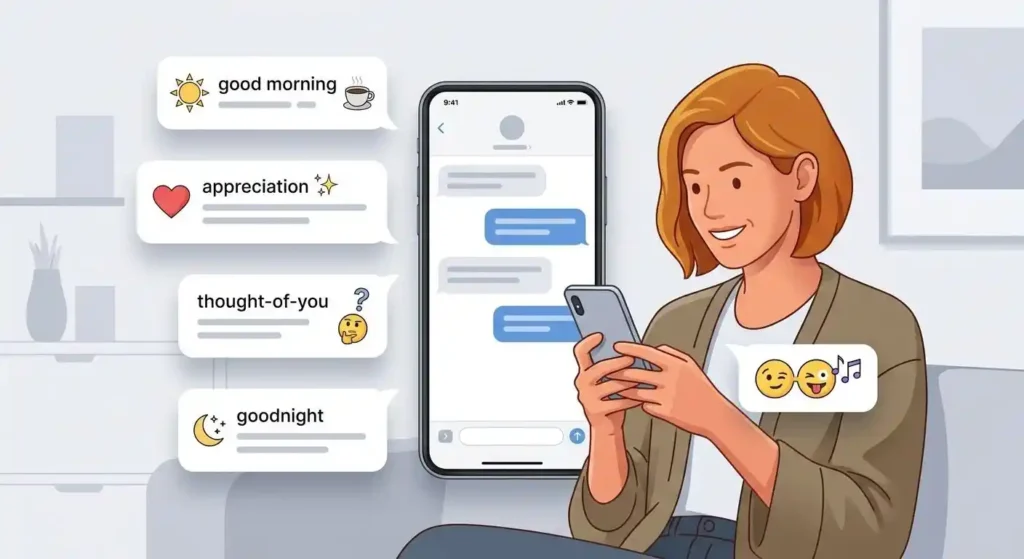
Common uses include:
Good Morning Messages
A person may send a thoughtful message at the beginning of the day.
Example:
“Good morning! Hope today goes really well for you.”
Goodnight Messages
A simple message before bed can communicate care and attention.
Example:
“Goodnight. I hope you get some good rest.”
Appreciation Messages
These focus on something specific the other person did.
Example:
“I really appreciated how you listened to me today.”
Thought-of-You Messages
These let someone know they crossed your mind.
Example:
“I saw something that reminded me of you today.”
Flirty Messages
Flirty texting can be playful without becoming overly serious.
Example:
“Okay, why are you so easy to talk to?”
Relationship Messages
People in established relationships may use texts to maintain connection throughout the day.
Example:
“Just checking in. Hope everything is going okay.”
Social Media DMs
Romantic or flirty conversations can also happen through direct messages. The same basic principles apply: context and mutual comfort matter more than using a particular phrase.
Real Chat Examples
Here are varied examples of romantic texting in different situations:
- After a good conversation:
“I really liked talking with you tonight.” - Showing appreciation:
“You were really kind to me today. I appreciate that.” - Thinking about someone:
“Random thought: that conversation we had earlier still has me smiling.” - Before a date:
“Looking forward to seeing you later.” - After meeting:
“I had a really nice time today.” - Light flirting:
“You’re becoming dangerously easy to talk to.” - Playful:
“So, are you always this charming?” - Encouraging:
“Good luck today. I’m rooting for you.” - Checking in:
“How’s your day going so far?” - Showing interest:
“I’d like to get to know you better.” - Remembering something:
“I remembered that story you told me yesterday.” - Sharing a memory:
“I keep thinking about how funny that moment was.” - Simple affection:
“Just wanted to say I’m glad I know you.” - After a difficult day:
“I hope tomorrow feels easier. Take care of yourself tonight.” - Planning time together:
“Want to continue our conversation when we see each other?” - Cute check-in:
“Just popping in to say hi.” - Expressing happiness:
“Talking to you always seems to improve my mood.” - Long-distance situation:
“I wish we could hang out today, but I’m glad we can still talk.” - Relationship appreciation:
“I really value the time we spend together.” - Simple and direct:
“I like talking to you.”
The best message depends on the relationship. A text that feels natural between established partners could feel too intense during an early conversation.
How to Reply to Romantic Texting
There is no single correct reply. Match your response to how you actually feel and the level of the conversation.
Casual Replies
- “Aww, that’s sweet.”
- “That made me smile.”
- “I liked hearing that.”
- “That’s really nice of you.”
Friendly Replies
If you do not want to make the conversation romantic, you can stay warm without encouraging a romantic interpretation.
- “That’s kind of you to say.”
- “I appreciate that.”
- “You’re really thoughtful.”
- “Haha, thank you!”
Funny Replies
For playful conversations:
- “Okay, smooth.”
- “Was that your best line?”
- “You’re getting pretty confident.”
- “I’ll give you points for that one.”
Neutral Replies
If you are unsure what the person means:
- “What do you mean?”
- “Haha, how so?”
- “I’m not sure how to read that.”
- “Are you being serious?”
Flirty/Relationship Replies
If you genuinely want to keep the conversation affectionate, you can respond warmly:
- “I like talking to you too.”
- “I was thinking about you earlier.”
- “I’m looking forward to seeing you.”
- “That’s actually really sweet.”
The safest approach is not to force a romantic tone just because someone else used one. Your response should match your own comfort level.
Context & Relationship Meaning
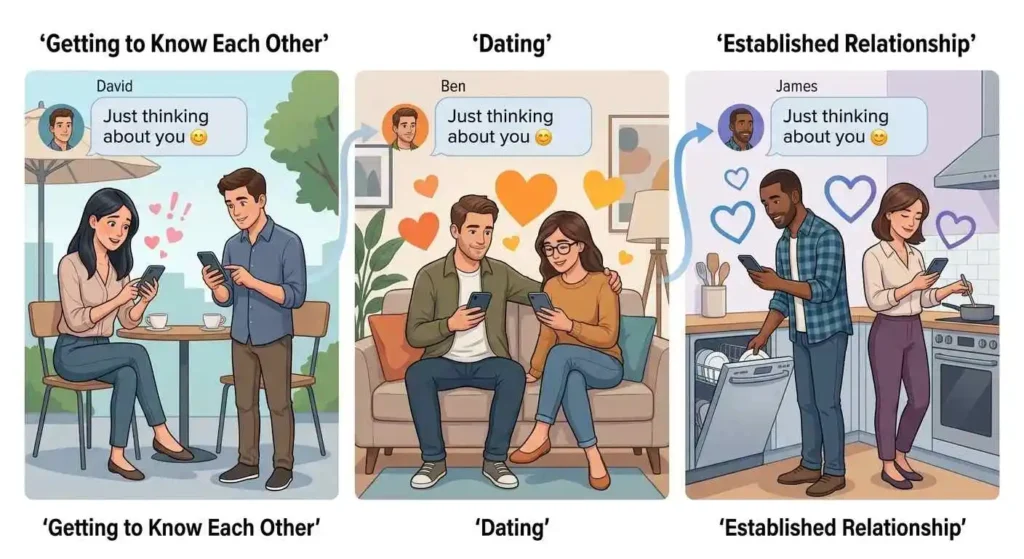
Romantic texting can look different depending on who is sending the message and the stage of the relationship.
From a Guy
A sweet or flirty message from a guy can indicate romantic interest, but the message alone does not prove what he feels. Look at the broader conversation and whether his behavior consistently matches the message.
From a Girl
The same principle applies when a girl sends a romantic or affectionate text. Gender does not give the message a different dictionary meaning.
From a Friend
Friends can use affectionate language without intending romance. Shared jokes, friendship style, and previous conversations can help explain the intended tone.
From a Crush
A romantic text from a crush may feel especially meaningful, but it is still important not to assume exactly what they mean from one message. Consider the overall pattern of communication.
In Dating
During dating, romantic texting may include getting-to-know-you questions, compliments, planning dates, checking in, and expressing interest.
In a Relationship
Partners may use texting for affection, encouragement, daily updates, relationship conversations, and staying connected when they are apart.
The important clues are context, wording, punctuation, emojis, previous messages, and the relationship itself. A single message cannot reliably prove that someone is in love, flirting, jealous, angry, or interested.
What Tone Does Romantic Texting Have?
Romantic texting can have several different tones:
- Sweet: warm and caring
- Affectionate: openly expresses appreciation or closeness
- Playful: uses humor and teasing
- Flirty: suggests romantic interest in a light way
- Supportive: focuses on encouragement and care
- Heartfelt: communicates deeper emotions
- Casual: shows interest without sounding intense
Tone often depends on the exact wording.
For example, “Hope your day goes well” can be friendly or romantic depending on the relationship. Adding personal context can make the intention clearer.
Is Romantic Texting Rude or Offensive?
Romantic texting is not inherently rude or offensive. It is generally a form of personal communication.
However, the appropriateness of a message depends on the relationship and whether the other person is comfortable with that style of communication.
A message that is welcome in a relationship may be inappropriate in a school, workplace, or formal setting. It is usually better to keep professional communication professional and avoid assuming someone wants romantic attention.
Romantic texting should also avoid pressuring someone to respond romantically. If the other person seems uncomfortable or uninterested, respect that boundary.
Who Uses Romantic Texting?
Romantic texting can be used by people at different stages of relationships, including people who are:
- Getting to know someone
- Dating
- In a committed relationship
- Maintaining a long-distance relationship
- Reconnecting with someone they care about
There is no reliable reason to assume romantic texting belongs to one particular age group or generation. People have different communication styles, and the meaning comes from the situation rather than a generational label.
Other Meanings of Romantic Texting
“Romantic texting” does not have a major unrelated technical or professional meaning.
In everyday digital communication, the phrase generally refers to using text-based messages to communicate romantic or affectionate feelings.
It should also be distinguished from romantic texting advice, which refers to guidance about how to communicate affection, interest, or emotional support through messages.
Romantic Texting vs. Similar Terms
| Term | Meaning | Main Difference |
|---|---|---|
| Romantic texting | Texting that expresses romantic or affectionate feelings | Broadest term |
| Flirty texting | Playful communication that may suggest attraction | Can be lighter and less emotionally serious |
| Sweet texting | Warm, kind, affectionate messages | Can be completely non-romantic |
| Love texting | Messages expressing love or deep affection | Usually stronger than casual flirting |
| Relationship texting | Everyday communication between romantic partners | Includes practical and non-romantic conversations |
| Crush texting | Messages exchanged when someone has a romantic interest in another person | Often associated with an early stage of attraction |
These categories can overlap. A single message may be sweet, romantic, and flirty at the same time.
Common Mistakes About Romantic Texting
Assuming Every Sweet Message Is Romantic
People can be naturally warm or supportive without having romantic intentions. Look at the broader context rather than one compliment.
Making One Message Mean Too Much
A heart emoji, compliment, or late-night conversation does not automatically establish someone’s feelings.
Being Too Intense Too Quickly
Long emotional declarations can feel uncomfortable when two people are still getting to know each other. Keeping the message appropriate to the relationship usually makes communication more natural.
Copying Messages That Do Not Sound Like You
A message can lose its meaning if it feels completely unlike your normal communication style. Personal details and genuine wording often make a message feel more natural.
Ignoring the Other Person’s Response
Romantic communication works best when it is mutual. If someone gives short, uncomfortable, or clearly uninterested responses, continuing to push the romantic tone may create an awkward situation.
Related Internet Slang
| Term | Meaning | Common Use |
|---|---|---|
| WYMM | Will you marry me? | Romantic or playful conversations |
| ILY | I love you | Expressing affection |
| IMY | I miss you | Showing that someone is missed |
| XOXO | Hugs and kisses | Affectionate messages |
| BAE | A term for a romantic partner or loved one | Casual relationship conversations |
| BF | Boyfriend | Referring to a male romantic partner |
| GF | Girlfriend | Referring to a female romantic partner |
These abbreviations can appear in romantic conversations, but their meaning still depends on context.
Real-World Conversation
Alex: “How was your day?”
Sam: “Pretty busy, honestly. How about yours?”
Alex: “Busy too. But talking to you is definitely the best part.”
Sam: “That’s actually really sweet.”
Alex: “I mean it. I always enjoy our conversations.”
Here, the romantic tone comes from the personal compliment and context, rather than from a special texting abbreviation.
People Also Ask
What is romantic texting?
Romantic texting is communication through text messages or online chats that expresses affection, emotional interest, or romantic feelings. It can be simple and casual or more heartfelt, depending on the relationship.
How do you start a romantic text conversation?
Start naturally with something connected to the person or your recent conversation. A thoughtful question, a genuine compliment, or a simple check-in can work better than an exaggerated declaration.
What is the difference between flirting and romantic texting?
Flirting is often playful and can be used to suggest attraction without expressing deeper feelings. Romantic texting is broader and can include affection, appreciation, emotional support, and relationship communication.
Can a friendly text sound romantic?
Yes. Some messages have an ambiguous tone, especially compliments or affectionate emojis. The relationship, previous conversation, and wording help determine whether the message is intended romantically.
How can you tell if a text is romantic?
Look for the overall pattern rather than one phrase. Personal compliments, expressions of affection, interest in spending time together, and relationship-focused language may create a romantic tone, but none of these alone proves someone’s feelings.
Is texting important in a relationship?
Texting can help people stay connected between in-person conversations. However, healthy communication is not limited to messages, and different people prefer different amounts of texting.
Can romantic texting be casual?
Yes. Romantic communication does not have to be serious or dramatic. A short check-in, shared joke, thoughtful compliment, or message about looking forward to seeing someone can all have a romantic tone.
Is romantic texting the same as sexting?
No. Romantic texting is a broad category that can involve affection, appreciation, support, or ordinary relationship conversation. It does not inherently involve sexual content.
Conclusion
Romantic texting means using messages to communicate affection, romantic interest, appreciation, or emotional closeness. It can be sweet, playful, supportive, flirty, or heartfelt depending on the relationship and situation.
The most important part is context and mutual comfort. A thoughtful message does not need to be dramatic to feel meaningful, and one text alone should not be treated as proof of someone’s romantic feelings.

Writing puns and jokes for three and a half years has given Grace Collins experience working with language across varied subjects. As a writer, she covers food, animals, seasonal themes, technology, entertainment, and trending topics. Grace gathers subject-specific terms, explores word associations, and polishes joke structures to improve phrasing, punchlines, and comedic timing.